When talking about longevity, attention often ends up on the search for the healthiest food, the most complete supplement or the newest molecule being studied by science. But living well over time does not depend on a single choice.
Lifestyle is a set of behaviours that, repeated day after day, can contribute to health and wellbeing. Nutrition, physical activity, sleep, stress management, social relationships and prevention are part of a much broader picture, in which food supplementation can also find its place.
Talking about lifestyle and longevity therefore means changing perspective: not looking for a single solution, but building a series of sustainable habits that can accompany us through the different stages of life.
This is the principle of the healthy lifestyle: taking care of yourself not through extraordinary gestures, but through realistic, repeatable daily choices.
Lifestyle and longevity: why daily habits matter
Longevity is influenced by numerous factors. Genetics, environment, socio-economic conditions, access to care and individual behaviours interact with each other and contribute to health over the course of life.
This means there is no formula capable of determining how many years we will live.
There is, however, an important margin in the way we choose to take care of ourselves.
Habits for living well do not necessarily have to be radical. In fact, they often work best when they can be integrated into daily life without becoming yet another source of stress.
A regular walk, balanced meals, reasonably regular sleep, physical activity, attention to prevention and a supplementation routine when needed are very different behaviours, but they share one characteristic: they can become part of everyday life.
Consistency counts more than perfection
One of the most common mistakes when trying to improve your lifestyle is thinking in absolute terms.
All or nothing. Perfect diet or failure. Intense training or no movement at all. Impeccable routine or complete abandonment.
Health, however, does not necessarily work according to this logic.
A sustainable healthy lifestyle leaves room for normality, for the unexpected and for periods when energy levels are different. The goal is not to do everything perfectly, but to build behaviours that can be maintained over time.
1. Nutrition: the foundation of a longevity-oriented lifestyle
Among the habits for living well, nutrition naturally occupies a central place.
A varied, balanced diet provides the body with the energy and nutrients it needs for its normal functions. Fruit and vegetables, legumes, cereals, protein sources, good-quality fats and adequate hydration can contribute to building an overall balanced diet.
There is no need, however, to turn every meal into an exercise in nutritional mathematics.
Eating well also means eating sustainably
A healthy diet must be able to fit into real life.
This means learning to build balanced meals, varying foods and maintaining a flexible relationship with eating. The pleasure of eating has its place too.
That is why, when talking about lifestyle and longevity, it is more useful to focus on the whole set of habits than on the search for a single “superfood”.
No food, on its own, can determine longevity. The value lies in the overall quality of the diet and in its continuity.
2. Movement: the body needs to be used
Movement is another pillar of a health-oriented lifestyle.
Regular physical activity contributes to maintaining physical capacity and autonomy and is an important component of prevention and general wellbeing.
You do not need to be sporty to start.
Walking, cycling, swimming, dancing, playing a sport or doing strength exercises are all different ways of staying active.
Reducing sedentary time is part of the journey
Physical activity is not just about working out.
Periodically breaking up long periods spent sitting, walking whenever possible and bringing more movement into daily activities can also help make your lifestyle more active.
The question, then, should not only be “how much do I train?”, but also:
“How much movement is part of my day?”
It is a simple distinction, but an important one when building habits for living well in the long run.
3. Sleep: an often undervalued part of the routine
Eating well and moving regularly are behaviours people often talk about. Sleep sometimes receives less attention, despite being fundamental to wellbeing.
Sleeping adequately allows the body to carry out its normal recovery processes and contributes to psychophysical wellbeing.
The amount of sleep needed can vary from person to person, but for adults general recommendations usually sit around 7–9 hours per night.
A good evening routine
The habits that precede sleep can also become part of a more balanced lifestyle.
Going to bed and waking up at relatively regular times, creating an environment that favours rest and reducing particularly stimulating activities in the evening, when possible, are small measures that can help build a routine more conducive to sleep.
There is no “perfect routine”.
There is the one you can actually keep.
4. Stress and psychological wellbeing
Longevity is not just about the body.
Stress, psychological balance and the quality of relationships are part of overall wellbeing and, consequently, of a truly integrated approach to a longevity lifestyle.
Stress is a normal response of the body and cannot be eliminated completely. What matters is learning to recognise the situations that feed it and finding personal strategies to manage them.
Making room for what makes you feel good
Physical activity, time outdoors, hobbies, social relationships, moments of pause and relaxation practices can all contribute to psychological wellbeing.
There is no universal solution.
For some it will be a walk without their phone. For others, reading, cooking, meeting friends or pursuing their passion.
The healthy lifestyle should not turn into a new list of obligations. Taking care of yourself must leave room for pleasure too.
5. Social relationships and quality of life
One of the least considered dimensions when talking about longevity is the social one.
Relationships with family, friends, partners, colleagues and community contribute to quality of life and psychological wellbeing.
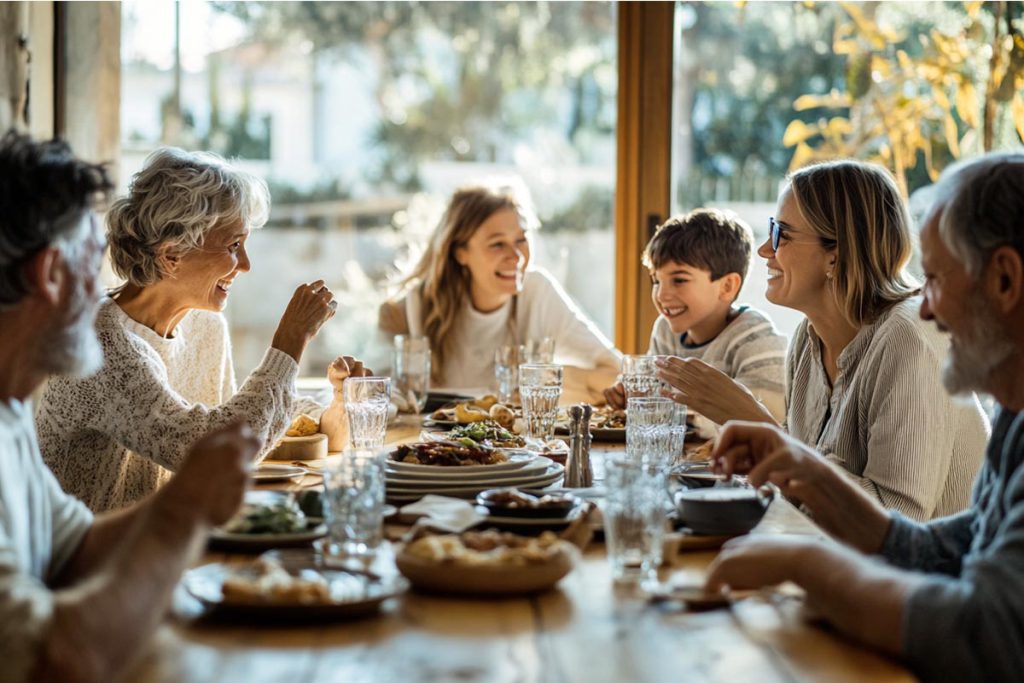
Having opportunities for socialising, feeling part of a network and maintaining meaningful relationships can become important components of a balanced life.
This reminds us that living well does not just mean taking care of your body, but also building a life context in which to feel good.
6. Prevention: taking care of your health before you need to
A longevity-oriented lifestyle cannot do without prevention.
Medical check-ups, recommended screenings, vaccinations, attention to risk factors and consulting health professionals when necessary are fundamental tools for taking care of your health.
Prevention is not particularly glamorous. It lacks the charm of the new molecule or the wellness routine photographed for Instagram.
But it is one of the most concrete habits we can build.
Knowing your body
Paying attention to changes, not ignoring persistent symptoms and seeing a doctor when necessary are part of a responsible approach to health.
Here too, the goal is not to control everything, but to be more aware.
7. The role of food supplementation
And so we come to a topic particularly close to Longevion.
If nutrition, movement, sleep, prevention and psychological wellbeing form the structure of a lifestyle, food supplementation can be a complementary element when appropriate.
A supplement does not replace a balanced diet and cannot compensate for lack of physical activity, insufficient sleep or overall unhealthy habits.
It is, precisely, one piece of the puzzle.
Why bring supplementation into a routine?
A routine can help make continuity easier.
The Longevion daily protocol stems precisely from this idea: organising different formulations into a structured journey, divided into two moments of the day.
The line includes formulas dedicated to specific ingredients and active principles, including collagen, hyaluronic acid, antioxidants, Coenzyme Q10 and other selected components.
The approach does not start from the promise of a radical transformation, but from the belief that self-care can become a daily gesture.
The Longevion protocol within a healthy lifestyle
The Longevion protocol fits into a broader concept of wellbeing.
Its role is not to replace what should already be the foundation of a balanced lifestyle, but to accompany those who want to give more attention to their supplementation routine.
Morning and evening: a simple routine
The protocol is organised into two moments:
Morning
- Vita EON
- Vita Booster
Evening
- Vita Aurea
- Vita Essence
This split turns intake into a recognisable gesture within the day.
The logic is simple: fewer decisions to make, greater ease in keeping the routine going.
Why longevity is not built in a month
The concept of lifestyle and longevity carries a fundamental word with it: time.
Healthy habits are not designed to produce an instant transformation. Their value lies in their ability to accompany us for months and years.
This is also why Longevion offers journeys of different durations.
30 days: getting started
The first month can be the moment when a new habit enters daily life.
The goal is above all to build the routine and understand how to fit it naturally into your day.
90 days: consolidating
Three months allow you to give the journey greater continuity.
The Box 90 Days is designed for those who want to turn supplementation into a more stable habit, keeping the daily protocol going over time.
180 days: continuing
Six months represent an even longer journey, in which the routine can become an established component of your lifestyle.
Not because there is some magic threshold after which certain results appear, but because continuity is an integral part of the healthy lifestyle concept.
Habits for living well do not have to be perfect
There is one last point worth underlining.
When talking about health and longevity, it is easy to create an endless list of things to do: eat perfectly, train, sleep eight hours, meditate, take certain nutrients, get check-ups, drink enough water.
The risk is turning wellbeing into a second job.
A more realistic approach is to ask yourself:
Which habits can I actually keep?
Small changes, maintained over time
A sedentary person can start by gradually increasing movement.
Someone who sleeps little can work on their evening routine.
Someone who eats erratically can start by making a few meals more balanced.
Someone who regularly forgets to take a supplement can link it to an already established habit.
The logic is always the same: start from what you can actually maintain.
A good, imperfect but lasting habit is far more useful than an impeccable routine abandoned after two weeks.
Healthy lifestyle: a personal project
There is no ideal lifestyle that works for everyone.
Age, work, family, physical activity, food preferences, health conditions and available time change from person to person.
That is why talking about a healthy lifestyle means, above all, building a personal balance.
You do not need to replicate the day of a professional athlete or the routine of someone living in a wellness retreat.
You need to find a sustainable way to take care of yourself.
Longevity as a perspective
Looking at longevity also means changing the question.
Not just:
“What can I do to live longer?”
But:
“What lifestyle do I want to build to feel good in the years to come?”
The second question is less spectacular, but far more concrete.
Longevity and lifestyle: a matter of balance
A longevity-oriented lifestyle does not have to be perfect, expensive or complicated.
It can be made of balanced meals, regular movement, adequate sleep, meaningful relationships, prevention and attention to your own wellbeing.
Food supplementation can fit into this system as a complementary element, when appropriate and consistent with individual needs.
This is the perspective of the Longevion protocol: not to offer a universal solution to longevity, but to provide a supplementation routine that can become part of a broader wellbeing journey.
Longevity is not a single gesture. It is the sum of the choices we repeat over time.
FAQ about lifestyle and longevity
What are the most important habits for longevity?
There is no single habit capable of determining longevity. A complete approach includes a balanced diet, physical activity, adequate sleep, prevention, stress management and social relationships. Food supplementation can be a complementary element when appropriate.
What is the best lifestyle for living well?
The best one is the one that manages to be sustainable over time. A healthy lifestyle includes habits compatible with individual needs and characteristics, without the need to follow extreme or rigid models.
Are supplements necessary to live longer?
Food supplements are not a necessary condition for longevity and do not replace a balanced diet. They can be used to complement nutrition when appropriate, based on individual needs and the characteristics of the product.
How can I start improving my lifestyle?
You can start with small, sustainable changes: gradually increasing movement, paying more attention to the quality of your diet, improving your sleep routine and making room for psychological wellbeing and relationships. Consistency matters more than perfection.
What is the Longevion daily protocol?
It is a food supplementation routine organised into two moments of the day, morning and evening, bringing together several formulations of the Longevion line. The protocol is designed to fit within a lifestyle oriented towards wellbeing and longevity.
Start with your everyday life
Taking care of your longevity does not mean waiting for the perfect moment.
It means starting with the habits we can actually keep: eating in a balanced way, moving, sleeping, cultivating relationships, dedicating time to prevention and paying attention to our wellbeing.
The Longevion daily protocol can fit right here — as part of a broader routine, not as its replacement.
Because a longevity-oriented lifestyle does not need to be extraordinary.
It needs to be daily, conscious and sustainable over time.